Sri Jayananda Prabhu Disappearance Day
Sri Jayananda Prabhu
A Glorious Life, a Glorious Departure
Remembering a Life of Selfless Service and Pure Devotion, Disciple of His Divine Grace Vishwa Guru Srila Prabhupada.
What Does It Mean to Die Gloriously?
Most of us fear death. We do not speak of it openly, do not wish to think about it, and when it draws close, we look away. And yet, the Vaisnava tradition teaches that there is such a thing as a glorious death — a departure so saturated with devotion that even the spiritual master pauses, writes a personal letter across the world, and declares it to be a cause for celebration.
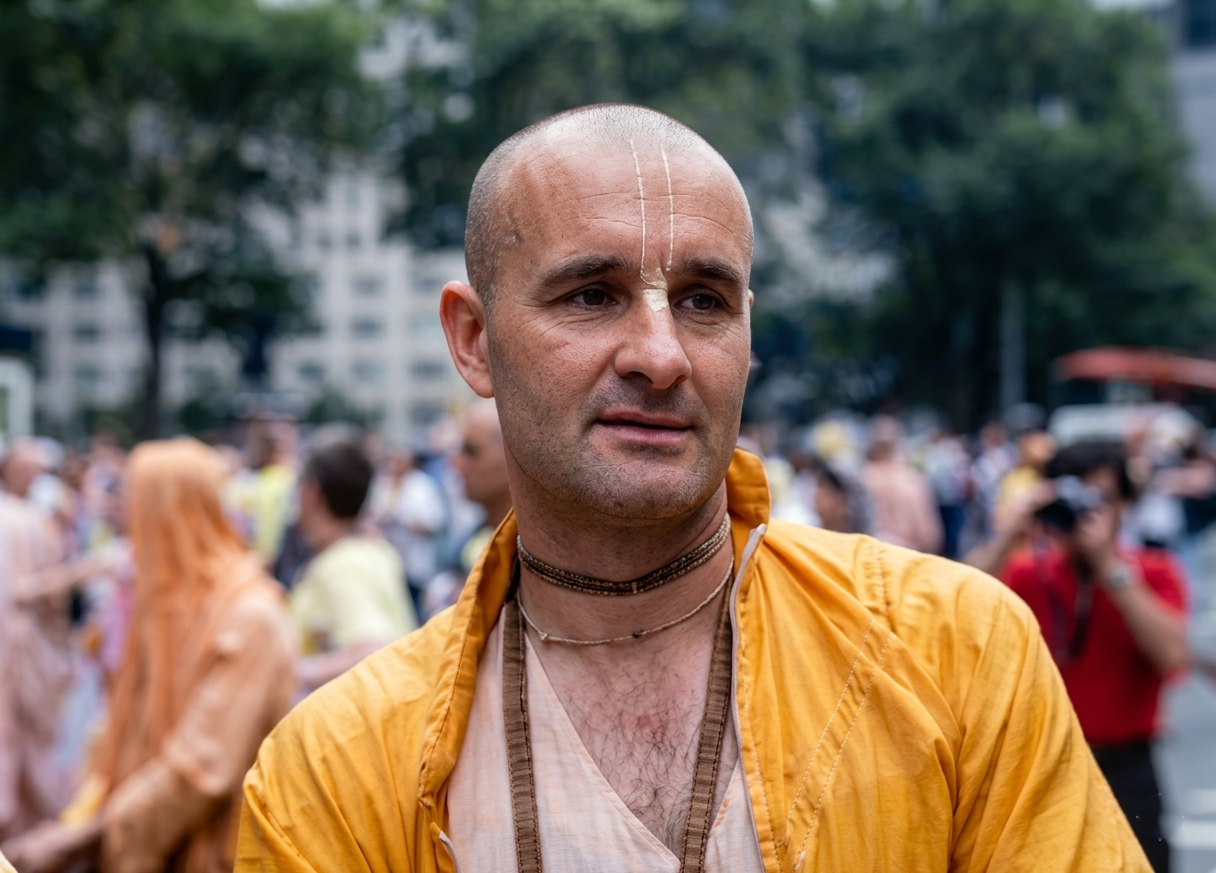
That is exactly what happened on 1st May 1977, when Sri Jayananda Prabhu — an American engineer-turned-taxi-driver-turned-pure-devotee — quietly left his body in Los Angeles, holding a tape recorder tightly to his chest, listening to his beloved spiritual master chanting Hare Krsna.
His name was Jayananda. It means "one who gives joy to all." And that is precisely what he did — for every soul fortunate enough to cross his path, from the bustling streets of San Francisco to the very end of his earthly journey.
From Ohio to the Feet of Srila Prabhupada — The Journey of a Seeker
Born James Kohr in Dayton, Ohio, Jayananda Prabhu held not one but two degrees — an engineering degree from Ohio State University and a teaching degree from San Francisco State College. By every external measure, he was a success. And yet, as he would later say himself, he was "never happy" before finding Krsna consciousness.
His depression was almost suicidal when, in 1967, he read a small article in a San Francisco paper about an Indian Swami who had come to the Bay Area to propagate the chanting of the names of God. Jayananda Prabhu felt a "ray of hope" when he read that article. Thinking the Swami may have something to offer, he made up his mind to attend the lectures.
That Indian Swami was none other than His Divine Grace Vishwa Guru A.C. Bhaktivedanta Swami Prabhupada — the Founder-Acarya of the International Society for Krsna Consciousness (ISKCON). The moment Jayananda Prabhu walked into that room, his eternal life began.
This is not a romantic exaggeration. In the Bhagavad-Gita As It Is (7.16), Srila Prabhupada translates Lord Krsna's words:
"O best among the Bhāratas, four kinds of pious men begin to render devotional service unto Me — the distressed, the desirer of wealth, the inquisitive, and he who is searching for knowledge of the Absolute."
— Bhagavad-Gītā As It Is (7.16)Jayananda Prabhu was that last type — a sincere seeker, distressed by the emptiness of material life, searching for something real. And Krsna, through His pure representative, found him.
(Source: "The Life of Jayananda Prabhu," by Kalakantha Dasa — published on krishna.com, the official digital platform of the Bhaktivedanta Book Trust)
The Disciple Srila Prabhupada Loved
From the very beginning, the bond between Srila Prabhupada and Jayananda Prabhu was extraordinary.
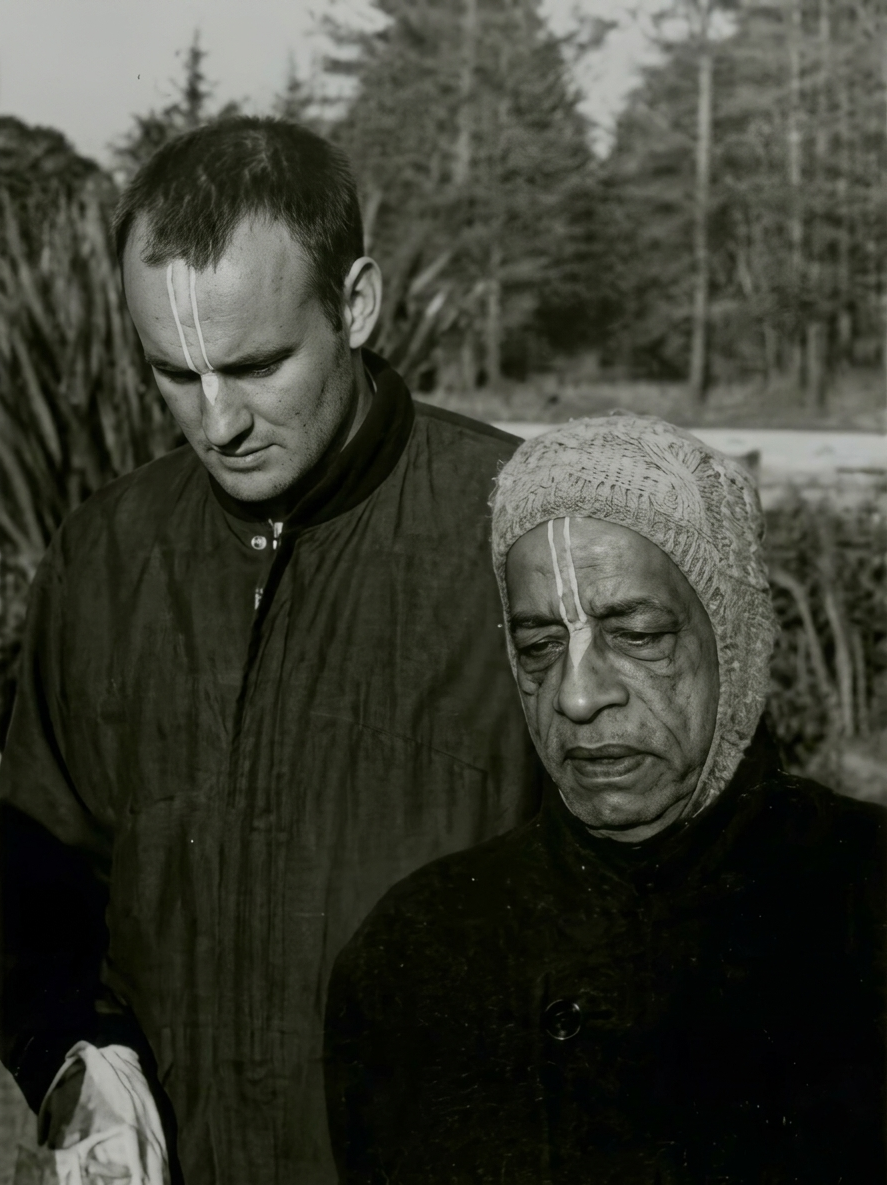 Sri Jayananda Prabhu with His Divine Grace Srila Prabhupada
Srila Prabhupada was always fond of Jayananda Prabhu and would sometimes invite his budding disciple to take prasadam with him in his room. "Srila Prabhupada would cook prasadam and serve me," Jayananda Prabhu recalled. "He didn't say anything — he just kept feeding me, and I kept eating."
Prasadam — food offered to Lord Krsna with love — is considered in the Vaisnava tradition to be a direct channel of the Lord's mercy. To be served prasadam from Srila Prabhupada's own hands was a blessing beyond measure, not just materially, but spiritually.
Jayananda Prabhu soon donated his entire life savings of $5,000 to Srila Prabhupada to help print the Bhagavad-Gita As It Is. From that point forward, he continued working as a taxi driver and contributed all his earnings to support the temple.
At twenty-eight, he became the senior devotee in San Francisco, and soon the temple president. Mukunda Dasa, who was there at the time, remembered Jayananda Prabhu's rare qualities: "He proved himself to be the most responsible and selfless person. You could never detect even the most subtle type of wish to satisfy his own personal needs. He had that very unique attribute — whatever needed to be done, he would do. He was driving his taxicab fifteen hours a day or more to get overtime to pay the temple's rent and various other expenses, and he was looking after fifteen or twenty new brahmacaris."
Brahmacaris are celibate students — young devotees who had just joined the movement, still learning, still growing. Jayananda Prabhu looked after them all, even while working long hours to keep the temple financially alive.
(Source: "Condolences for Jayananda Prabhu," Back to Godhead magazine, Vol. 12, No. 6, June 1977 — the official ISKCON publication, published immediately after his departure)
"A successful life is one of Krsna consciousness. While living he is engaged in Krsna conscious business, and when dying he goes back home, back to Godhead."
— Srila Prabhupada, personal letter to Jayananda Prabhu, 26 February 1977The Man Who Brought Lord Jagannatha to the Western World
If you have ever seen a Ratha Yatra — the magnificent festival of Lord Jagannatha's chariot rolling through city streets — you have witnessed something that Sri Jayananda Prabhu made possible for the entire Western world.
Ratha Yatra means the "chariot festival." Ratha means chariot, and yatra means journey or procession. In this ancient festival, Lord Jagannatha — a form of Lord Krsna who is the Lord of the Universe — comes out of the temple to bless all who behold Him, without distinction of caste, creed, or background.
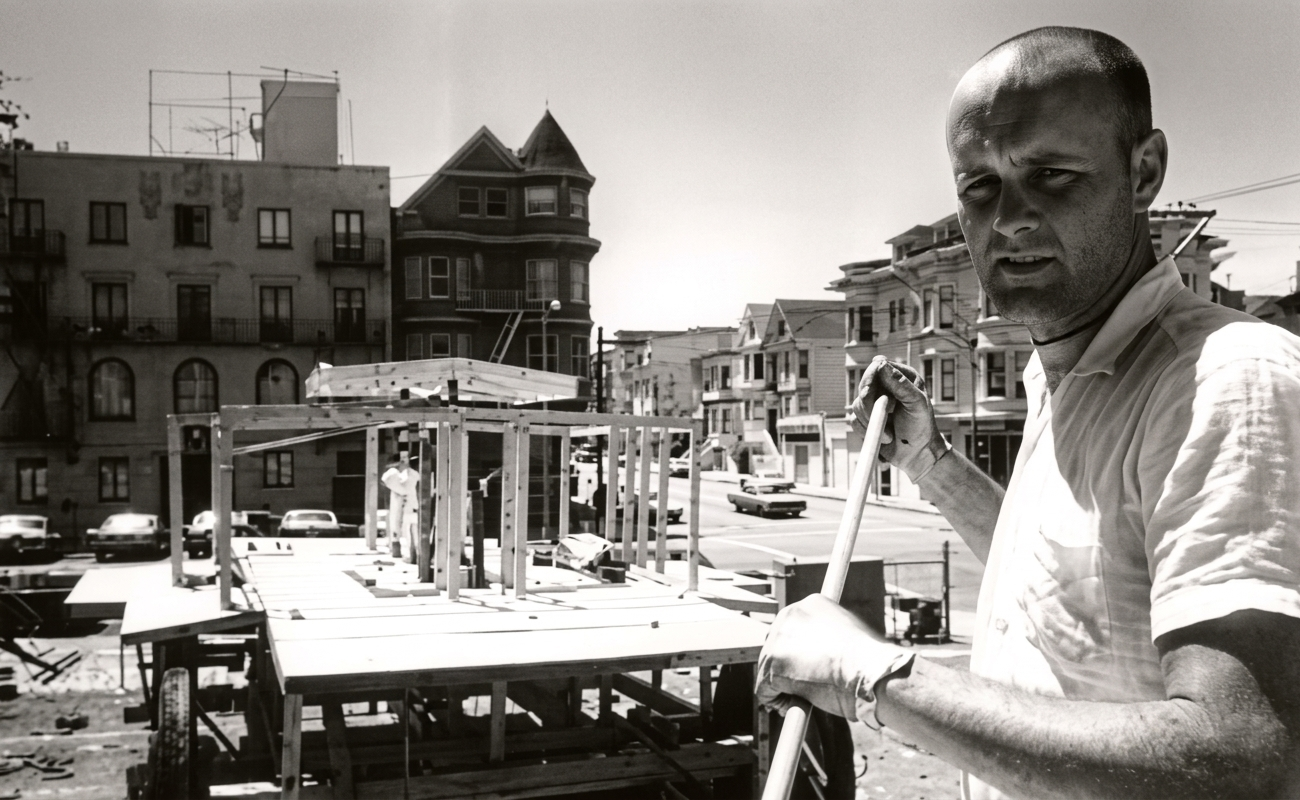 Sri Jayananda Prabhu actively building the Ratha Yatra Chariot
Jayananda Prabhu organised the construction of the cart for the first-ever ISKCON Ratha Yatra festival, held in Golden Gate Park, San Francisco, in 1967 — the first such festival ever to be held outside India.
He drove all around San Francisco collecting donations of fruits and flowers, found people to help decorate the cart, installed the sound system, and distributed posters in the shops. He had no budget, no blueprint, and no precedent. He had only devotion — and that was enough.
Srila Prabhupada was so pleased that he renamed the San Francisco temple "New Jagannatha Puri" in honour of the festival. And from that first chariot rolling down Frederick Street to the sea in 1967, Jayananda Prabhu never stopped. From then until his passing ten years later, he spent several months of every year doing whatever was needed to make the festival a success — first in San Francisco, and later in New York and Los Angeles.
During his final days, incapacitated as he was, he still helped design special Ratha carts that could be disassembled and transported from city to city — so that Lord Jagannatha could travel to even more devotees.
He was on his deathbed. He was designing chariots.
(Source: Berkeley Art and Interreligious Pilgrimage Project, Graduate Theological Union; "Condolences for Jayananda Prabhu," Back to Godhead magazine, June 1977)
How He Lived — The Qualities of a True Vaisnava
A Vaisnava is a devotee of Lord Visnu, or Krsna — one who has surrendered fully to the Lord's service. In the Nectar of Instruction (Text 5), Srila Prabhupada explains six loving exchanges between Vaisnavas, including prasada-seva — honouring the Lord's food with reverence. Jayananda Prabhu lived every one of these principles naturally.
He would rise every morning before four, attend mangala-arati, chant all his rounds of japa, read, and cook prasadam — never once deviating. He was, as those around him remembered, "completely happy as long as he was practising Krsna consciousness."
Japa is the meditative chanting of the Hare Krsna maha-mantra on prayer beads. Mangala-arati is the early morning ceremony of greeting the Deities — the sacred forms of the Lord — with lamps, flowers, and song. Beginning the day in this way is the foundation of sadhana-bhakti, or regulated devotional practice.
During his early years in Krsna consciousness, senior devotees would often describe Jayananda Prabhu as "the most advanced devotee in the movement." Though respected by all, he was always humble and unassuming. His obvious discomfort at hearing criticism of other devotees was one characteristic that stuck in the memory of all who knew him — if someone began speaking unfavourably about another devotee, Jayananda Prabhu would quietly change the subject, or simply leave to do some service.
He was a cook, janitor, fundraiser, taxi driver, temple president, chariot builder, book distributor, incense salesman, and street kirtana leader — whatever was needed, he did.
This is seva — selfless service — in its purest expression. Not service when convenient. Not service when recognised. Service as the very breath of his existence.
(Source: "Remembering a Friend and an Inspiration," Back to Godhead magazine, May/June 2017)
"When I leave my body, I want very much to come back to continue serving Srila Prabhupada in this world."
— Sri Jayananda Prabhu, in his final days (Recorded in Back to Godhead magazine, June 1977)His Last Gift — Medicine Money Offered at the Guru's Feet
There is one detail about Sri Jayananda Prabhu's life that, more than any other, reveals the depths of his surrender.
In his very last letter to Srila Prabhupada, Jayananda Prabhu enclosed a gift of $5,000 — money that had been set aside specifically for his own medical expenses. He was dying of leukaemia. He had little time left. And his final act of correspondence to his spiritual master was to send away the very funds meant to ease his own suffering.
He was so anxious to serve Srila Prabhupada that he even gave up the desire to return to the spiritual world. "When I leave my body," he said near the end, "I want very much to come back to continue serving Srila Prabhupada in this world."
This is the sentiment of an utterly pure devotee — one who does not even desire liberation or Vaikuntha, but only more seva, more service to the mission of his spiritual master. In the Bhagavad-Gita As It Is (18.54), Srila Prabhupada translates:
"One who is thus transcendentally situated at once realises the Supreme Brahman and becomes fully joyful. He never laments or desires to have anything. He is equally disposed toward every living entity. In that state he attains pure devotional service unto Me."
— Bhagavad-Gītā As It Is (18.54)That state — free from personal desire, equally loving to all, absorbed in pure devotional service — was the state Jayananda Prabhu lived in, every single day, right until the very end.
(Source: "Condolences for Jayananda Prabhu," Back to Godhead magazine, June 1977)
The Final Departure — A Death That Silenced All Doubt
For the last few months, Jayananda Prabhu's body had been ravaged by leukaemia. Eventually, he abandoned all attempts at recovery and moved to the Los Angeles temple — New Dvaraka — to immerse himself in the pure association of Lord Krsna's Deity and His devotees.
Even during his time in hospital, rather than dwelling on his own suffering, he used every opportunity to preach about Krsna consciousness to doctors, nurses, and patients around him.
On his last day, the pain increased to the point where he could no longer even chant the holy name. Moaning in great pain, he expressed the uselessness of maintaining his diseased body any longer. At the very end, he hugged his tape recorder tightly, listening to his spiritual master's chanting of Hare Krsna — and left his body.
He departed on 1st May 1977 — four days after his thirty-eighth birthday, and just one day before the festival celebrating the appearance of Lord Nrsimhadeva.
"Whoever, at the time of death, gives up the body while remembering the Supreme Lord will attain to His nature; of this there is no doubt."
— Śrīmad-Bhāgavatam (2.1.6)Jayananda Prabhu Prabhu did not just remember the Lord at the time of death. He had remembered Him, served Him, and lived for Him every single day of the ten years from 1967 to 1977. The maha-mantra on his tape recorder was the final sound his ears carried him out of this world on.
(Source: Srila Prabhupada Lila — the authenticated diary of Srila Prabhupada's personal secretary, recording the events surrounding Jayananda Prabhu's departure)
What Srila Prabhupada Said — Words That Settle Every Question
Srila Prabhupada's personal letters to and about Jayananda Prabhu are among the most moving documents in ISKCON's history. They are also the most authoritative testimony we have.
On 26th February 1977, writing to Jayananda Prabhu as his disciple faced his final months, Srila Prabhupada wrote:
"This body is today or tomorrow finished. We should not be very much bothered about the body. Trees also live for thousands of years, but that does not mean a successful life. A successful life is one of Krsna consciousness. By the grace of Krsna, from the very beginning you are a devotee, and that is the real profit of your life. About a sadhu it is said, jiva va mara va — a sadhu may live or die, it doesn't matter. While living he is engaged in Krsna conscious business, and when dying he goes back home, back to Godhead."
— Srila Prabhupada, Personal Letter to Jayananda Dasa, 26 February 1977Four days after Jayananda Prabhu's departure, writing from Mumbai on 5th May 1977, Srila Prabhupada wrote:
"I am feeling very intensely your separation. In 1967 you joined me in San Francisco. You were driving my car and chanting Hare Krsna. You were the first man to give me some contribution ($5,000) for printing my Bhagavad-gita."
— Srila Prabhupada, Personal Letter to Jayananda Dasa, 5 May 1977And then, in his letter to Ramesvara Dasa on 11th May 1977 — the declaration that every devotee should carry always:
"Jayananda's death is glorious. It is very good that he had stated, 'What is the use of such a useless body? Better to give it up.' He has left his body very wonderfully, and he has been transferred to Vaikuntha. I have already sent a condolence letter for publication in Back to Godhead. Everyone should follow the example of Jayananda. I am very proud that I had such a nice disciple. If possible, Jayananda's picture should be hung in the ratha of Lord Jagannatha, and in all of our temples a day may be set aside for holding a festival in his honour, just as we do on the disappearance day of the other great Vaisnavas."
— Srila Prabhupada, Personal Letter to Ramesvara Dasa, 11 May 1977These are not words of ordinary condolence. These are the words of a pure devotee certifying the spiritual destination of his disciple — and instructing the entire ISKCON world to honour that destination every year.
(Source: All three letters authenticated and published in Back to Godhead magazine, June 1977, and in the ISKCON Letters Archive)
Conclusion — The Life That Teaches Us Everything
Sri Jayananda Prabhu gave his savings not once but twice to his spiritual master's mission. He built Lord Jagannatha's chariot from nothing, year after year after year. He chanted on street corners, cooked mountains of prasadam, drove taxis, cleaned floors, and then — in his final, most beautiful moment — held a tape recorder to his heart as Srila Prabhupada's voice chanted the maha-mantra, and left this world.
His spiritual master said it plainly and with great love: his death is glorious.
For those of us who have not yet reached that standard — and most of us have not — his life remains the most gentle, practical, and joyful guide. We do not need to be extraordinary. We need only to be sincere. We need only to chant, to serve, to love — as Sri Jayananda Prabhu did, every single day.
"He reasons ill who says that Vaiṣṇavas die, when thou art living still in sound! The Vaiṣṇavas die to live, and living try, to spread the holy name around."
— Śrīla Bhaktivinoda ṬhākuraJayananda Prabhu is living still — in every Ratha Yatra cart that rolls through any street in any city in the world. May we all receive a drop of his mercy.
Sri Jayananda Prabhu ki jaya!
Frequently Asked Questions — Sri Jayananda Prabhu
Who was Sri Jayananda Prabhu?
Sri Jayananda Prabhu (1939–1977), born James Kohr in Dayton, Ohio, was one of the earliest and most beloved disciples of Srila Prabhupada in San Francisco. An engineering graduate who gave up material success to serve his spiritual master, he became temple president of the San Francisco ISKCON centre and is celebrated throughout the Vaisnava world for his extraordinary humility, selfless service, and the glorious manner in which he departed this world.
What is Jayananda Prabhu's disappearance day and why is it celebrated?
Sri Jayananda Prabhu left his body on 1st May 1977 in Los Angeles. Srila Prabhupada personally instructed, in a letter dated 11th May 1977, that Jayananda Prabhu's disappearance day should be observed in all ISKCON temples as a festival — just as the disappearance days of other great Vaisnavas are honoured. It is a day to remember his life of pure devotion and draw inspiration from his example.
What was Jayananda Prabhu's role in Ratha Yatra?
Jayananda Prabhu organised the first-ever ISKCON Ratha Yatra festival outside India, held in San Francisco's Golden Gate Park in 1967. He personally designed, built, and arranged the Ratha carts with minimal resources, relying entirely on devotion and determination. He continued this service in New York and Los Angeles until his very last months, designing transportable carts even while battling leukaemia.
What did Srila Prabhupada say about Jayananda Prabhu's death?
In his personal letter to Ramesvara Dasa on 11th May 1977, Srila Prabhupada wrote: "Jayananda's death is glorious... He has left his body very wonderfully, and he has been transferred to Vaikuntha... I am very proud that I had such a nice disciple." This is one of the strongest personal endorsements Srila Prabhupada ever gave to a disciple's spiritual standing.
How can I follow the example of Jayananda Prabhu in daily life?
Jayananda Prabhu's life offers simple, practical inspiration for every devotee: rise early and chant your rounds without fail; serve whatever service is in front of you without looking for recognition; offer prasadam generously to all; never speak ill of other devotees; and, above all, keep the holy name at the centre of your life — in joy, in difficulty, and even at the very moment of death.
🌿 Connect With Us
We would love to welcome you to our growing community of seekers. Reach us through any of the platforms below or visit us in person.
ISKCON Thiruvanmiyur (Hare Krishna Movement Chennai — Affiliated to ISKCON Bangalore Regn. S-49/78-79)
🗺️ Open in Google Maps →